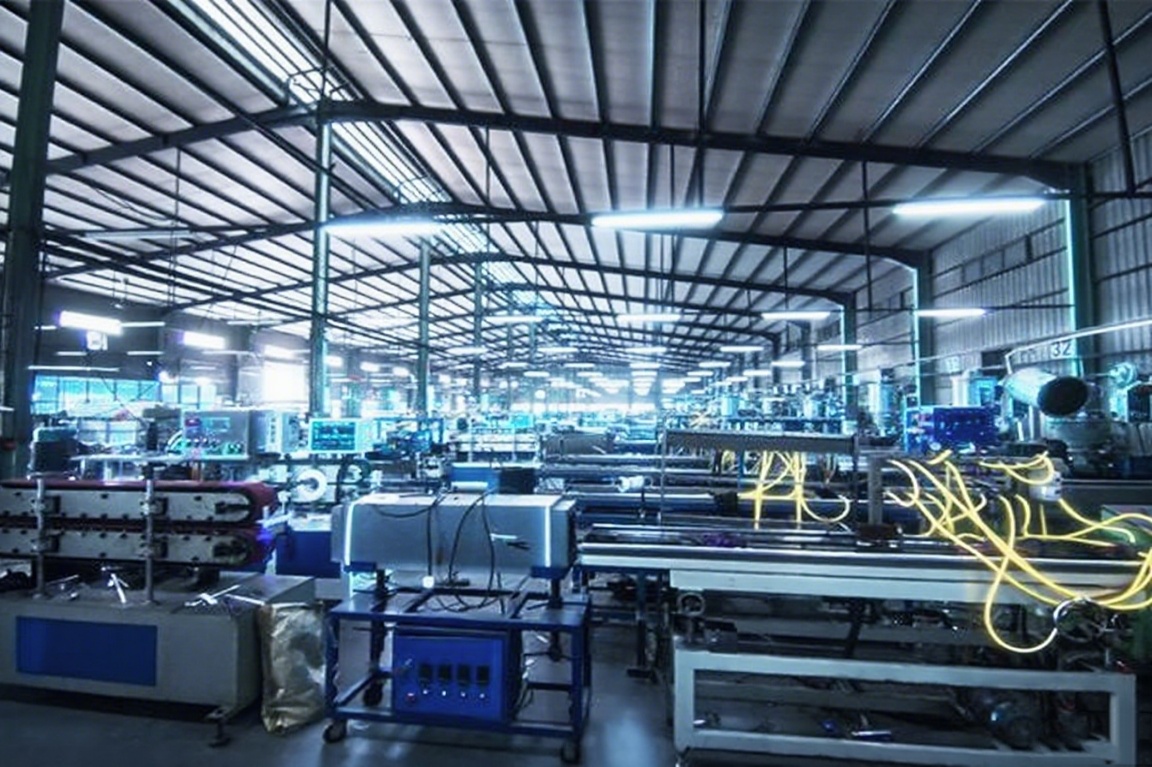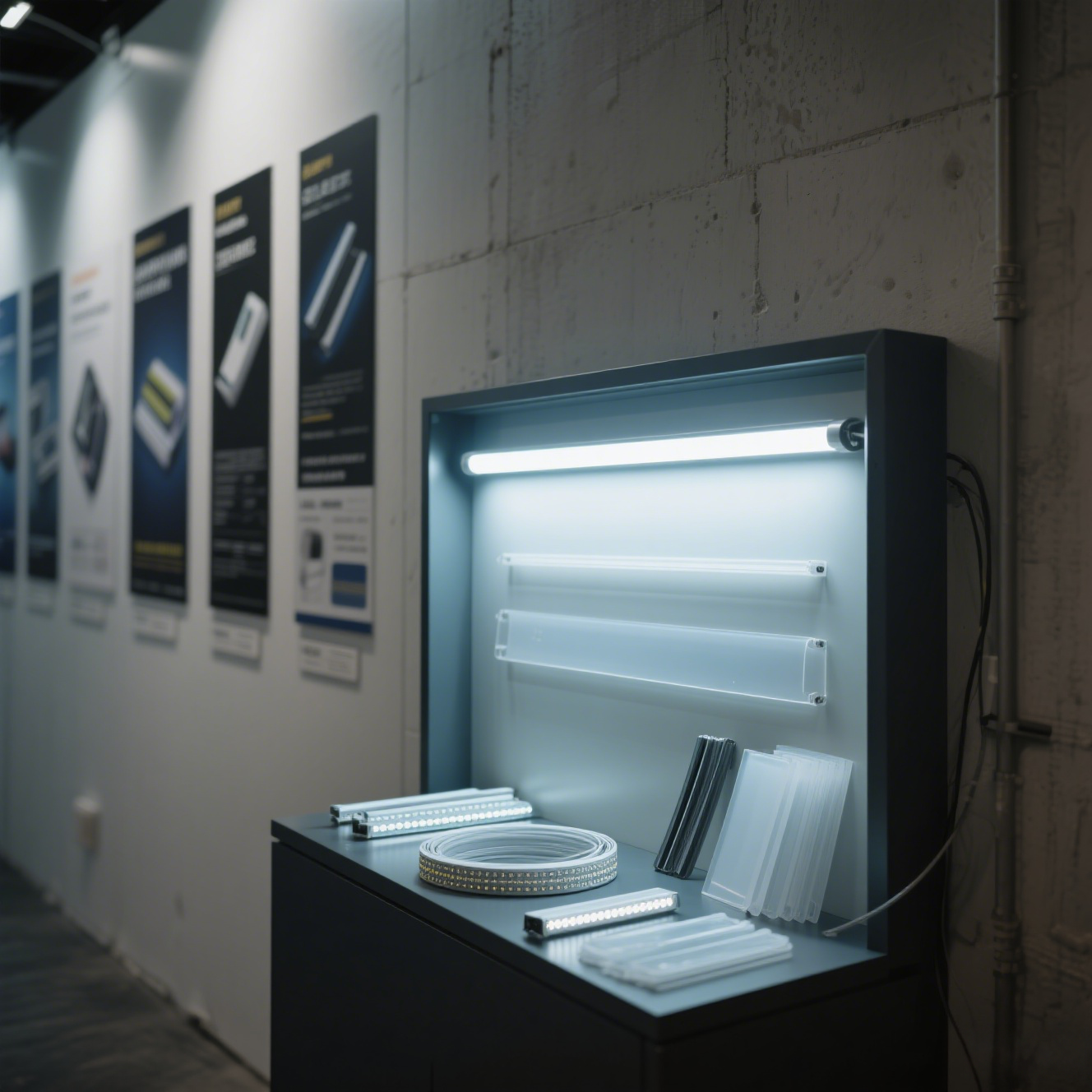
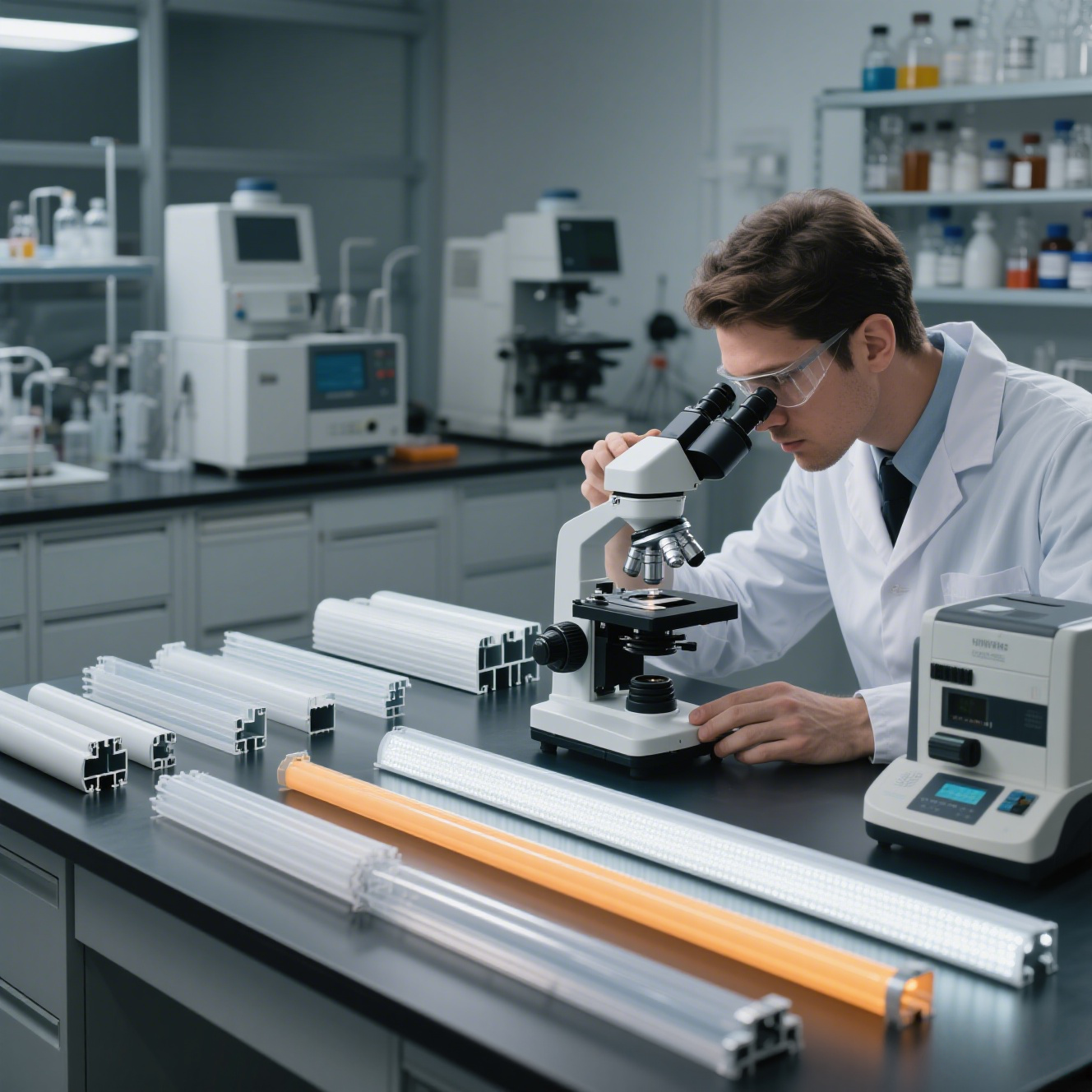
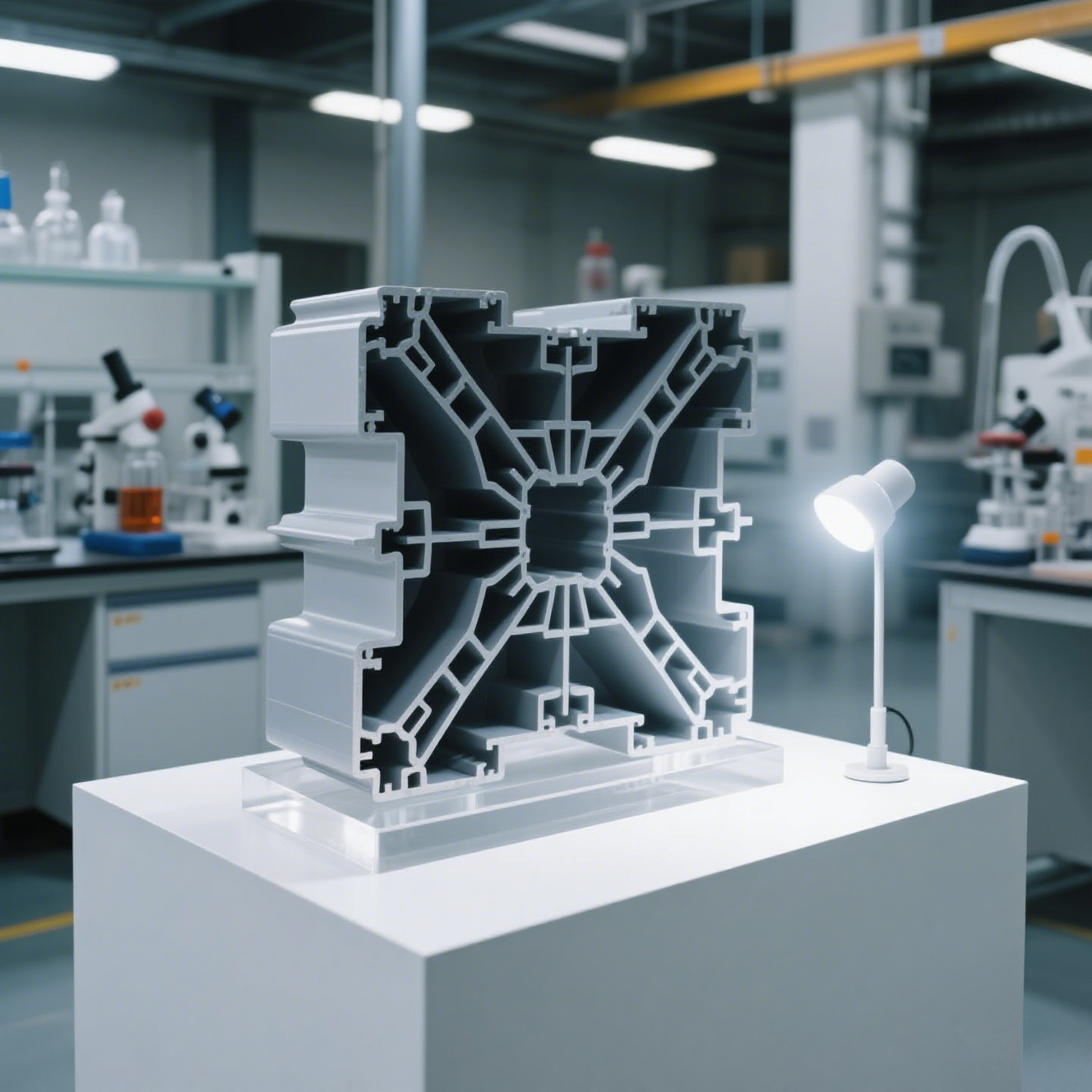
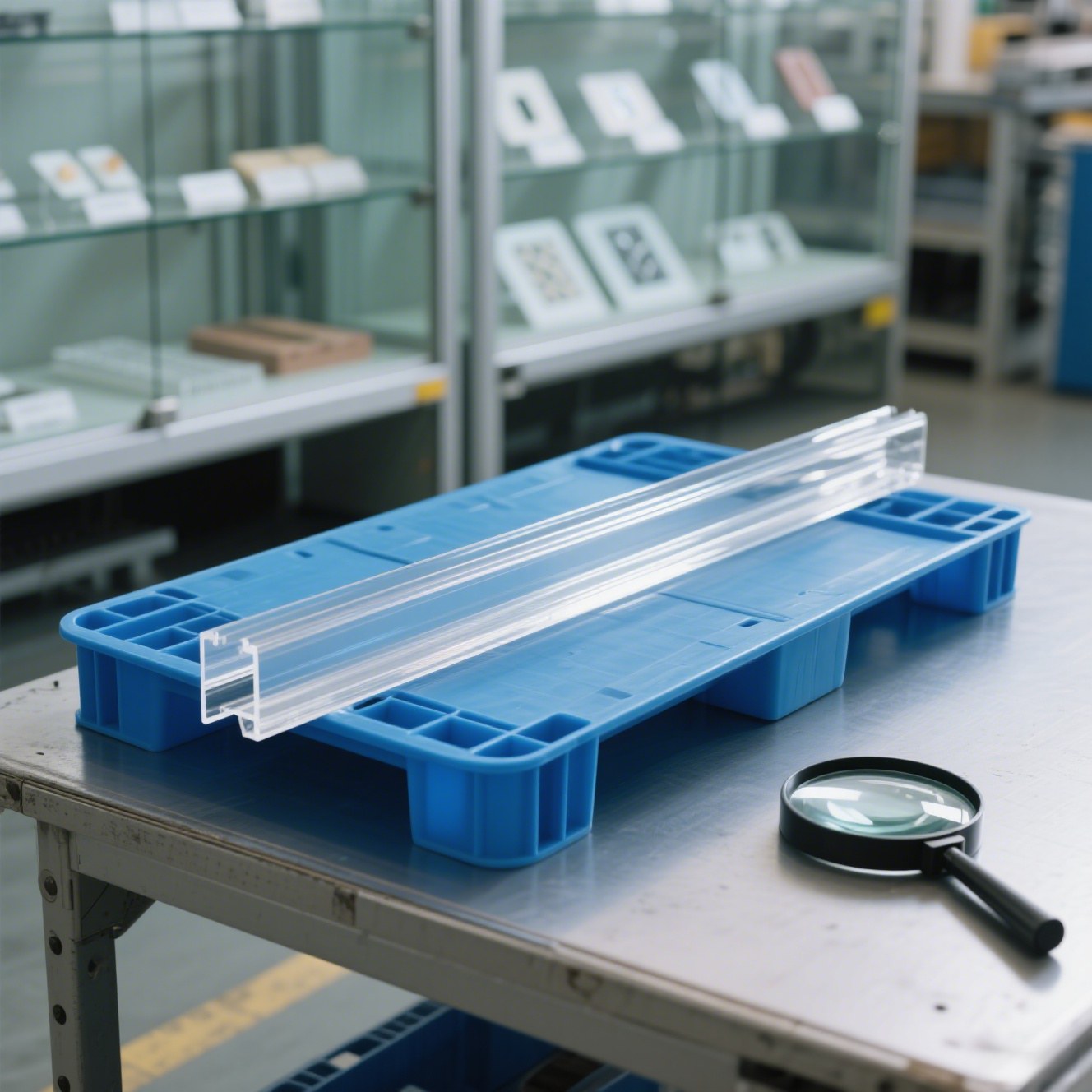
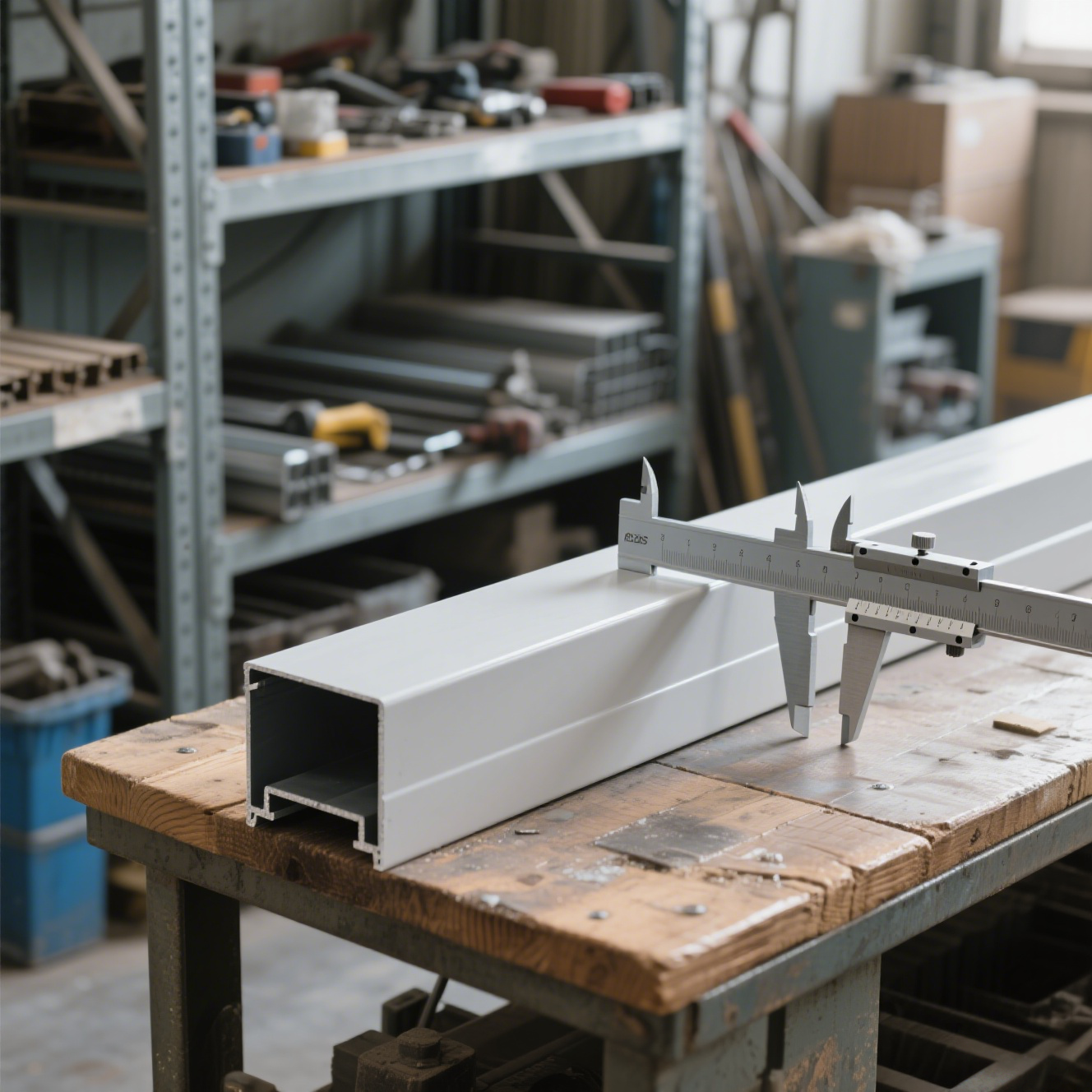
The combination of large plastic profiles and LED technology has brought lightweight and flexibly designed innovative products to fields such as lighting and display, such as LED guardrail tubes and display screen frame profiles. The precision plastic extrusion process is the foundation for achieving high-quality production of large plastic profiles, and its technical level directly determines the feasibility and reliability of LED integration solutions.
The core of the precision plastic extrusion process lies in raw material selection and process parameter optimization. Different types of large plastic profiles require suitable raw materials; for example, PVC profiles are suitable for low-cost scenarios, while PC profiles, with their high temperature resistance and good light transmittance, are more suitable for LED lighting enclosures. During the extrusion process, the matching of screw speed and melt pressure is crucial: excessively high screw speed can lead to excessive shear heat, and unstable pressure can cause uneven wall thickness of the profiles, affecting the uniform distribution of LED light sources.
When integrating LEDs into large plastic profiles, common technical issues include: uneven light efficiency, where thickness deviation of the profile’s light-transmitting surface or inconsistent light transmittance of raw materials leads to dark areas or light spots in LED illumination; and insufficient weather resistance, as large plastic profiles used outdoors are prone to aging and discoloration under ultraviolet radiation, affecting LED light transmission efficiency and aesthetics.
Key technical solutions to address the above issues: In the precision extrusion stage, use an online thickness gauge for real-time monitoring of profile wall thickness, combined with an automatic adjustment system to ensure thickness deviation ≤ 0.05mm; adopt precision mixing equipment to ensure uniform dispersion of additives (such as anti-UV agents and light transmittance modifiers) in raw materials, improving the weather resistance and light transmission uniformity of the profiles. In addition, for LED installation, in-mold insert injection molding technology can be used to integrally extrude metal conductive parts or heat dissipation parts with plastic profiles, simplifying the assembly process and improving the stability of LED integration.