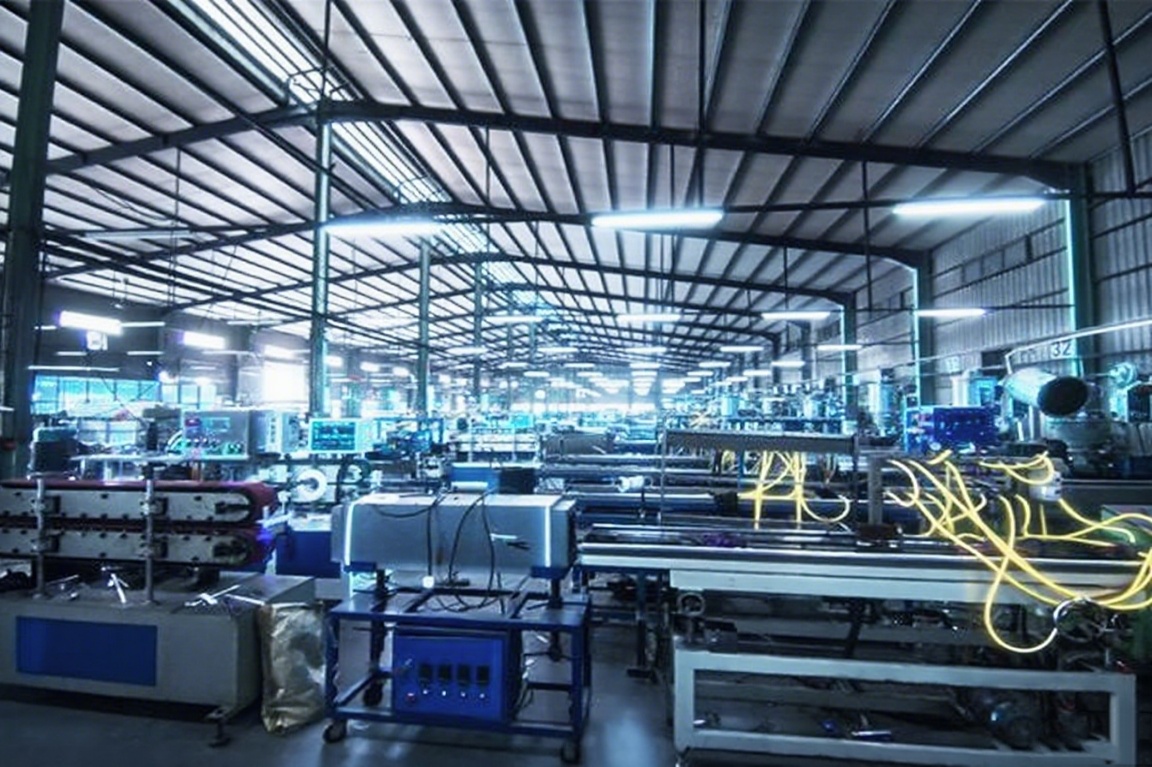
pvc extruded profiles specification
Material : PVC
Color : Pantone Color number
Height : 28mm
Width : 40mm
Thickness : 1.5mm
Weight : 160g/meter
Design of PVC plastic formula
Pure polyvinyl chloride (PVC) resin is a kind of strong polar polymer, and its intermolecular force is large, which leads to high softening temperature and melting temperature of PVC. Generally, it needs 160 ~ 210 ℃ to process. In addition, the substituted chlorine group contained in the PVC molecule easily leads to the dehydrochlorination reaction of PVC resin, thus causing the degradation reaction of PVC. Therefore, PVC is extremely unstable to heat, and the temperature rise will greatly promote the dehydrochlorination reaction of PVC. The pure PVC starts the dehydrochlorination reaction at 120 ℃, thus leading to the degradation of PVC.
In view of the above two defects, additives need to be added in the processing of PVC, so as to make various soft, hard, transparent, good electrical insulation, foaming and other products that meet people’s needs. When selecting the variety and dosage of additives, we must comprehensively consider various factors, such as physical-chemical properties, flow properties and molding properties, and finally establish an ideal formula.
When PVC is processed at high temperature, it is easy to release HCl and form unstable polyene structure. At the same time, HCl has autocatalytic effect and will further degrade PVC. In addition, the presence of oxygen or the presence of iron, aluminum, zinc, tin, copper and cadmium plasma will catalyze the degradation of PVC and accelerate its aging. Therefore, there will be various undesirable phenomena in the plastic, such as discoloration, deformation, cracking, reduction of mechanical strength, reduction of electrical insulation performance, and embrittlement.
In order to solve these problems, stabilizers must be added to the formulation, especially heat stabilizers. Stabilizers for PVC include heat stabilizers, antioxidants, ultraviolet absorbers and chelating agents. In the formulation design, different varieties and quantities of stabilizers are selected according to the product use requirements and processing process requirements.
1、 Heat stabilizer
The heat stabilizer must be able to capture the self catalytic HCl released by the PVC resin, or react with the unstable polyene structure generated by the PVC resin to prevent or reduce the decomposition of the PVC resin. Generally, the characteristics, functions and product requirements of the heat stabilizer selected in the formula are considered. For example:
Organotin heat stabilizers have good performance and are good varieties for PVC hard products and transparent products, especially
Epoxy stabilizers are usually used as auxiliary stabilizers. This kind of stabilizer can improve the stability of light and heat when used together with barium, cadmium, calcium and zinc stabilizers, but its disadvantage is easy to exude. Polyols and organic phosphites are also used as auxiliary stabilizers.
In recent years, rare earth stabilizers and hydrotalcite stabilizers have also appeared. The main characteristics of rare earth stabilizers are excellent processing performance, while hydrotalcite is a non-toxic stabilizer.
2、 Antioxidant
In the process of processing and using, PVC products will be oxidized by heat and ultraviolet rays, and its oxidation degradation is related to the generation of free radicals. The main antioxidants are chain break terminators or free radical eliminators. Its main function is to combine with free radicals to form stable compounds and terminate the chain reaction. The main antioxidant for PVC is generally bisphenol A. There are also auxiliary antioxidants or hydrogen peroxide decomposing agents. The auxiliary antioxidants for PVC are triphenyl phosphite and phenyldiisobutyl phosphite. The combination of main and auxiliary antioxidants can exert synergistic effect.
3、 Ultraviolet absorber
For PVC products used outdoors, due to ultraviolet radiation in its sensitive wavelength range, PVC molecules become excited or their chemical bonds are destroyed, causing free radical chain reaction and promoting PVC degradation and aging.
UV-9 is commonly used in PVC agricultural film, with a general dosage of 0.2-0.5 phr. TBS, bad and OBS, which belong to salicylic acid, have mild effects. When used in combination with antioxidants, they will have a good anti-aging effect. For non transparent products, generally, the weather resistance is improved by adding light shielding rutile titanium dioxide. At this time, if ultraviolet absorber is added, a large amount is required, which is not very cost-effective.
4、 Lubricant
The role of the lubricant is to reduce the friction between the polymer and the equipment and the internal friction between the polymer molecular chains. The former is called external lubrication and the latter is called internal lubrication. Such as silicone oil, paraffin, etc. with external lubrication, such as monoglyceride, stearyl alcohol and esters with internal lubrication.
As for metal soaps, they have both. In addition, it should be noted that the term “internal and external lubrication” is only a customary term for us, and there is no obvious boundary. Some lubricants play different roles under different conditions, such as stearic acid, which can play an internal lubrication role at low temperature or in a small amount. However, when the temperature rises or the dosage increases, its external lubrication role gradually prevails. Another special case is calcium stearate, which is used as an external lubricant when used alone, But when it is combined with hard lead and paraffin, it becomes an internal lubricant to promote plasticization.
In hard PVC plastics, excessive lubricant will reduce the strength and affect the process operation. For injection products, peeling will occur, especially near the gate. For injection products, the total amount of stearic acid and paraffin is generally 0.5-1 part; for extrusion products, it is generally not more than 1 part.
5、 Filler
Some inorganic fillers are added to PVC as extenders to reduce the cost, improve some physical and mechanical properties (such as hardness, design thermal deformation temperature of PVC plastic formula, dimensional stability and reduction of shrinkage), and increase electrical insulation and flame resistance. In recent years, it has been a research hotspot to make inorganic fillers nano and apply them to plastics as modifiers. Some research achievements have been made, such as toughening and strengthening PVC with nano calcium carbonate. The important problem to be solved is how to uniformly disperse nano products in plastics.
In the process of hard extrusion molding, the general fillers of PVC products are calcium carbonate and barium sulfate. For injection molded products, it is required to have good fluidity and toughness. Generally, titanium dioxide and calcium carbonate are suitable. The filler content of hard products is less than 10 phr, which has little effect on the performance of products. In recent years, in order to reduce the cost, people have made great efforts to add filler, which is unfavorable to the performance of products.
In terms of soft products, adding an appropriate amount of filler will make the film have good elasticity, smooth surface dry and not bright, and have the advantages of high heat resistance and low permanent deformation. Talc powder, barium sulfate, calcium carbonate, titanium dioxide and clay are commonly used in the formulation of soft products. Talc has little effect on transparency. In the production of film, the amount of filler can reach 3 parts, which affects the performance. with
Pay attention to the fineness of the filler, otherwise it is easy to form a rigid block and break the plastic. Calcium carbonate is mainly added to the ordinary auxiliary cables; Calcined clay is added to the insulation grade cable coating to improve the heat resistance and electrical insulation of the plastic. In addition, antimony trioxide can also be added to soft products as a filler to improve the flame resistance of the products.
6、 Flame retardant
Plastics used in building materials, electrical, automobile and aircraft are required to have flame retardancy. Generally, compounds containing halogen, antimony, boron, phosphorus and nitrogen have flame retardancy and can be used as flame retardants.
Rigid PVC plastic has flame retardancy due to its high chlorine content. For PVC cable, decorative wall and plastic curtain cloth, adding flame retardant can increase its flame resistance. Chlorinated paraffin, antimony trioxide (2-5 parts), phosphate and other flame retardants are commonly used. Phosphate esters and chlorinated plasticizers also have flame retardancy.
pvc extruded profiles picture:


Tooling/Mould development time
We can according your drawing to make new tooling/mould for it,usually it takes 15 days,
and we will sent sample to you for checking,after your confirm the sample,we can start
process the order.
we can customize cartons, cardboard, wooden cases, pallets and label paper according to customer packaging requirements.
Trade Term:EXW/FOB/FCA.
Hot Tags: 45mm width pvc extruded profiles, China, suppliers, manufacturers, factory, customized, buy, made in China